Events and Exchanges
From Wind to Hydrogen and E-Fuels: Highlights from the NTU E3 Center × MIRDC Joint Seminar
Date: July 14, 2026
Location: Room 1206, National Center for Research on Earthquake Engineering (NCREE), National Taiwan University (NTU)
Aviation and shipping are two of the hardest sectors to decarbonize — planes and cargo ships cannot simply be plugged in. That makes hydrogen and the e-fuels derived from it one of the few credible routes to net zero, and it raises a question Taiwan will have to answer: can we get from offshore wind in the Taiwan Strait to the fuels that aircraft and vessels actually burn?
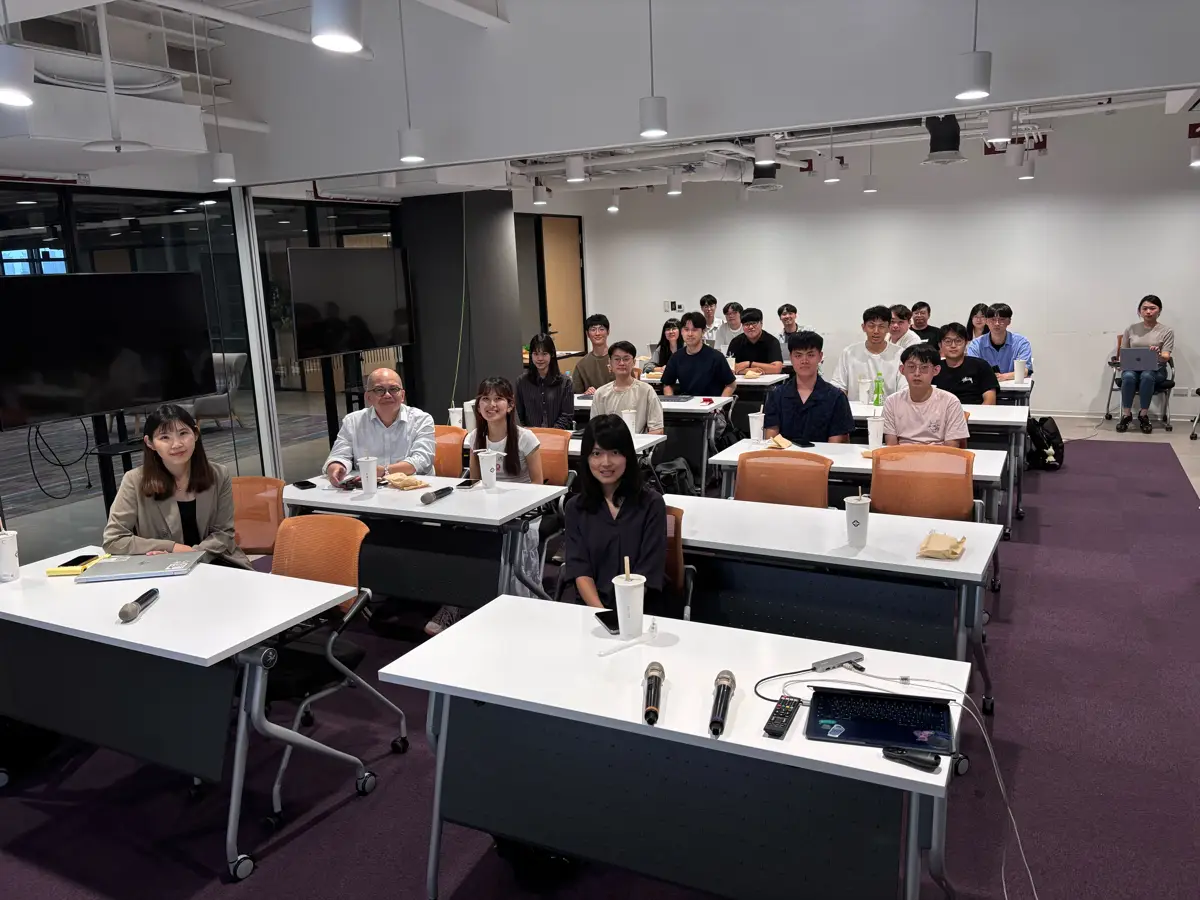
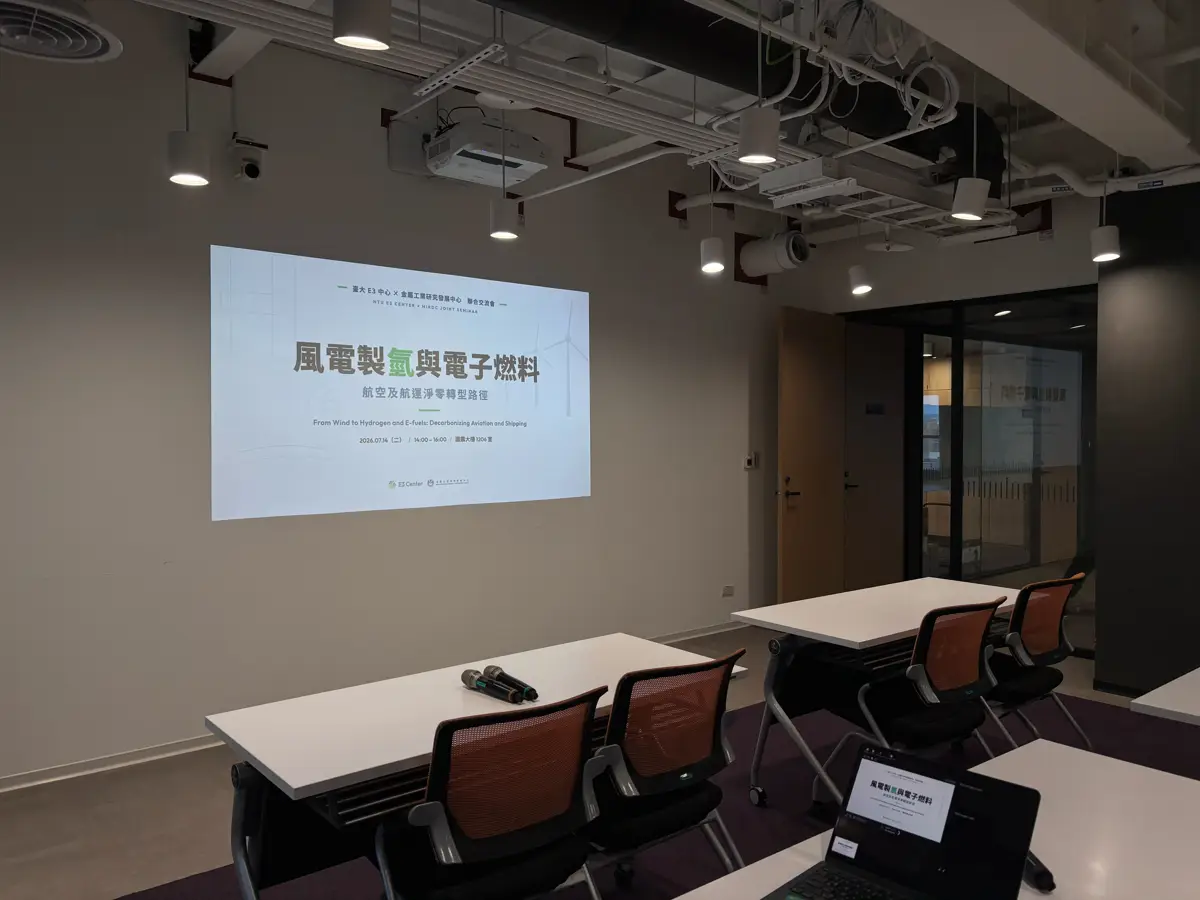
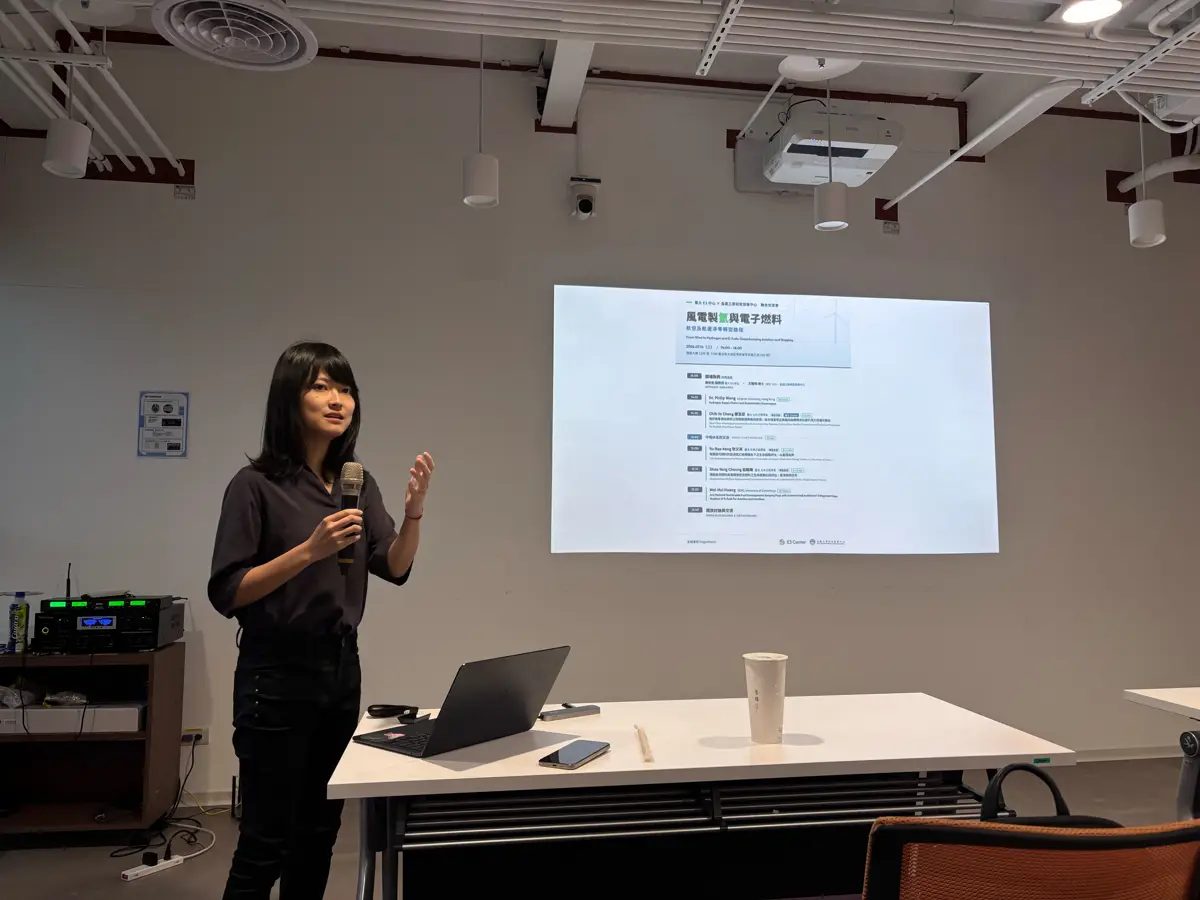
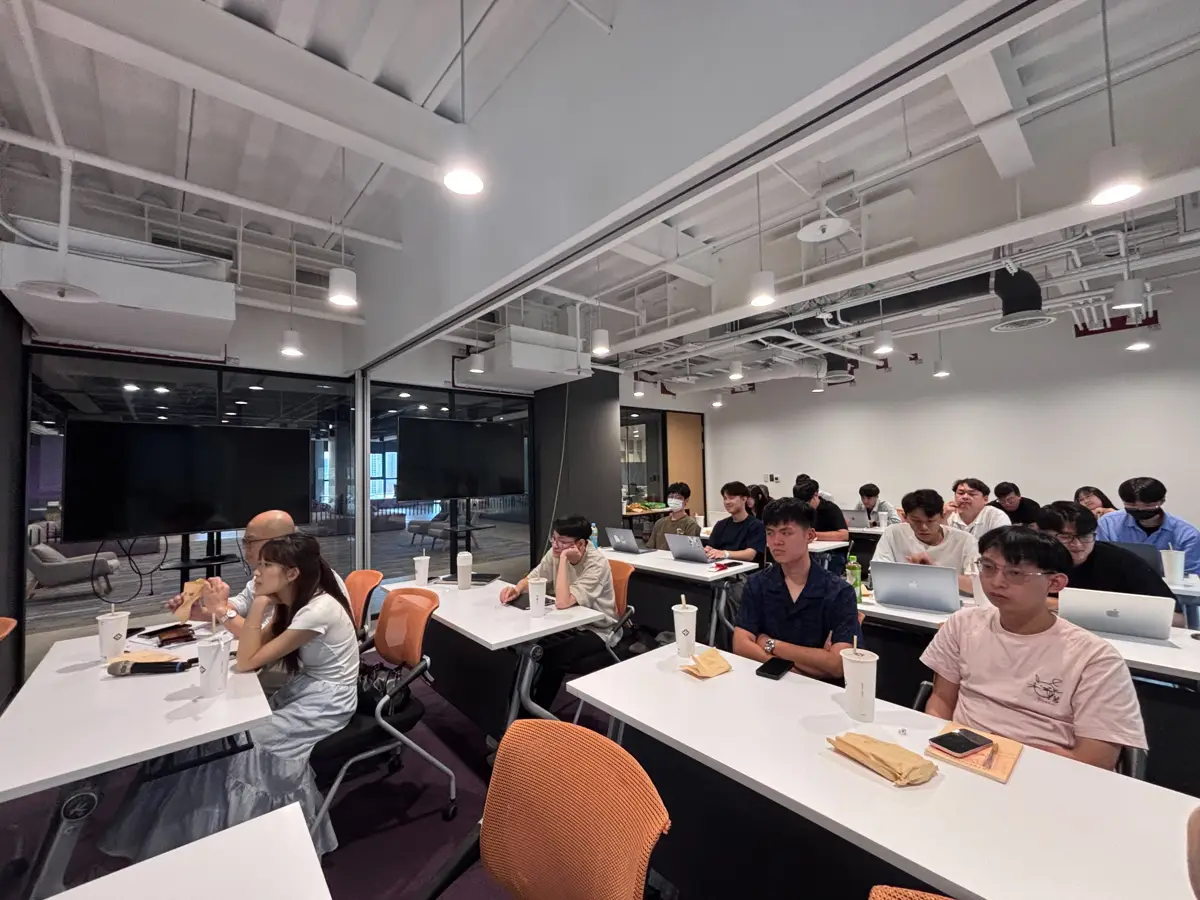
On July 14, the E3 Center took up exactly that question at the NTU E3 Center × MIRDC Joint Seminar, "From Wind to Hydrogen and E-fuels: Decarbonizing Aviation and Shipping" (風電製氫與電子燃料:航空及航運淨零轉型路徑), co-organized with the Metal Industries Research & Development Centre (MIRDC). Opening the afternoon, Dr. I-Yun Lisa Hsieh framed the session as a walk down the full value chain — forecasting the wind, making the hydrogen, converting it into fuel, and governing the whole thing — and as a continuation of the wind-to-hydrogen collaboration with MIRDC launched earlier this year.
Rules Are Not an Obstacle — They Are the Market
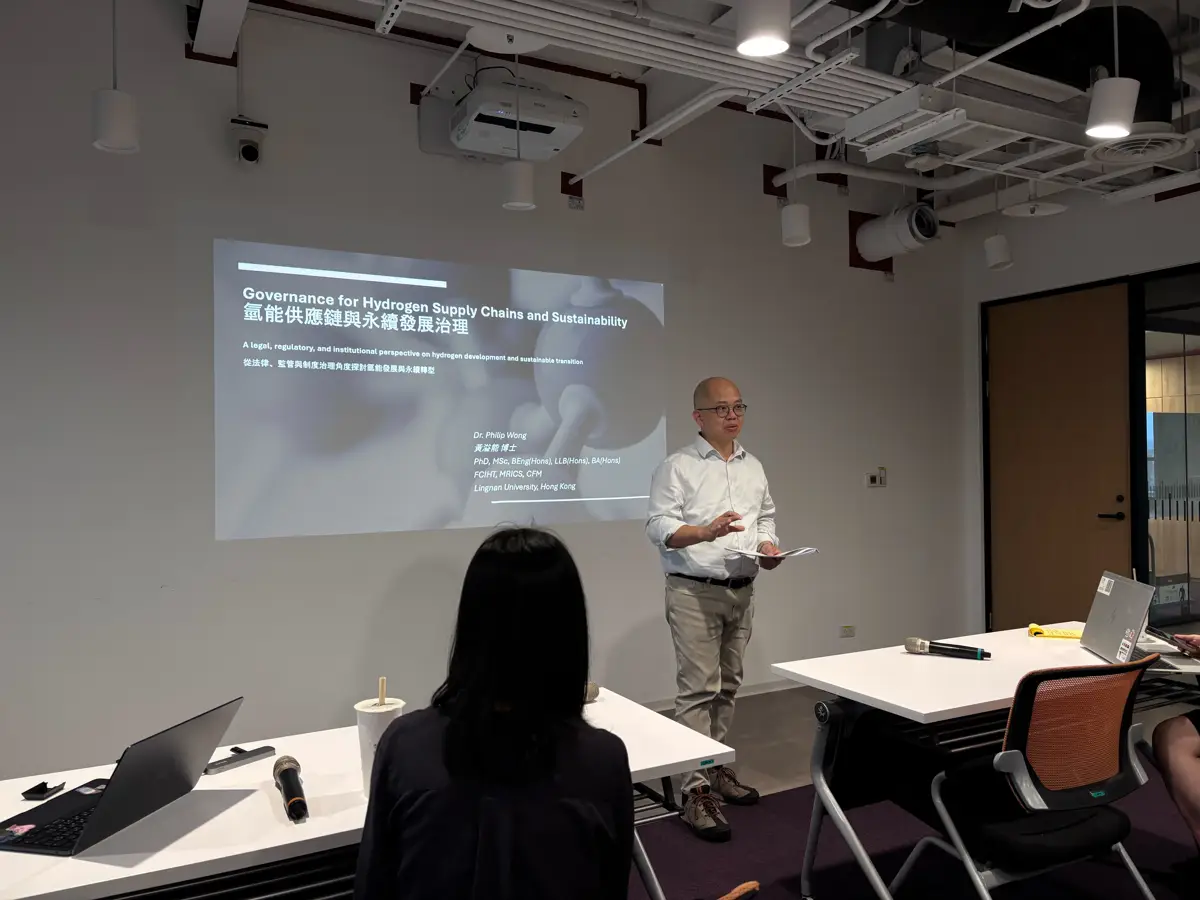
Dr. Philip Wong (Lingnan University, Hong Kong) opened with a legal and institutional take on hydrogen, and his central move was to reframe what hydrogen even is: not a product, but a full supply chain spanning production, storage, transport, trade, and end use — one that cuts across energy, industry, ports, transport, environment, and public safety at once.
That framing did a lot of work. Hydrogen's physical properties bring real risks of leakage, combustion, and material incompatibility, and each carrier — liquid hydrogen, ammonia, methanol — comes with its own safety regime. Cross-border chains add certification gaps and unclear liability on top. His point about sustainability was equally pointed: not all hydrogen is low-carbon, and without carbon-intensity standards and life-cycle accounting, a hydrogen market is wide open to greenwashing. Governance is not what you do after the market forms — it is the precondition for the market forming at all.
From Wind Forecasts to Finished Fuel
Three E3 students then traced the chain from resource to product.
Chih-Ya Cheng, joining online for QA session with recorded video, started at the front end with short-term wind forecasting from weather-station data — a CNN-LSTM model that predicts the next fifteen minutes of wind speed and direction minute by minute, correcting a persistence baseline with a learned residual for speed and a rotation for direction. Its margin over that baseline widens the further ahead it looks, which is exactly where an energy management system needs the accuracy to schedule electrolyzer load.
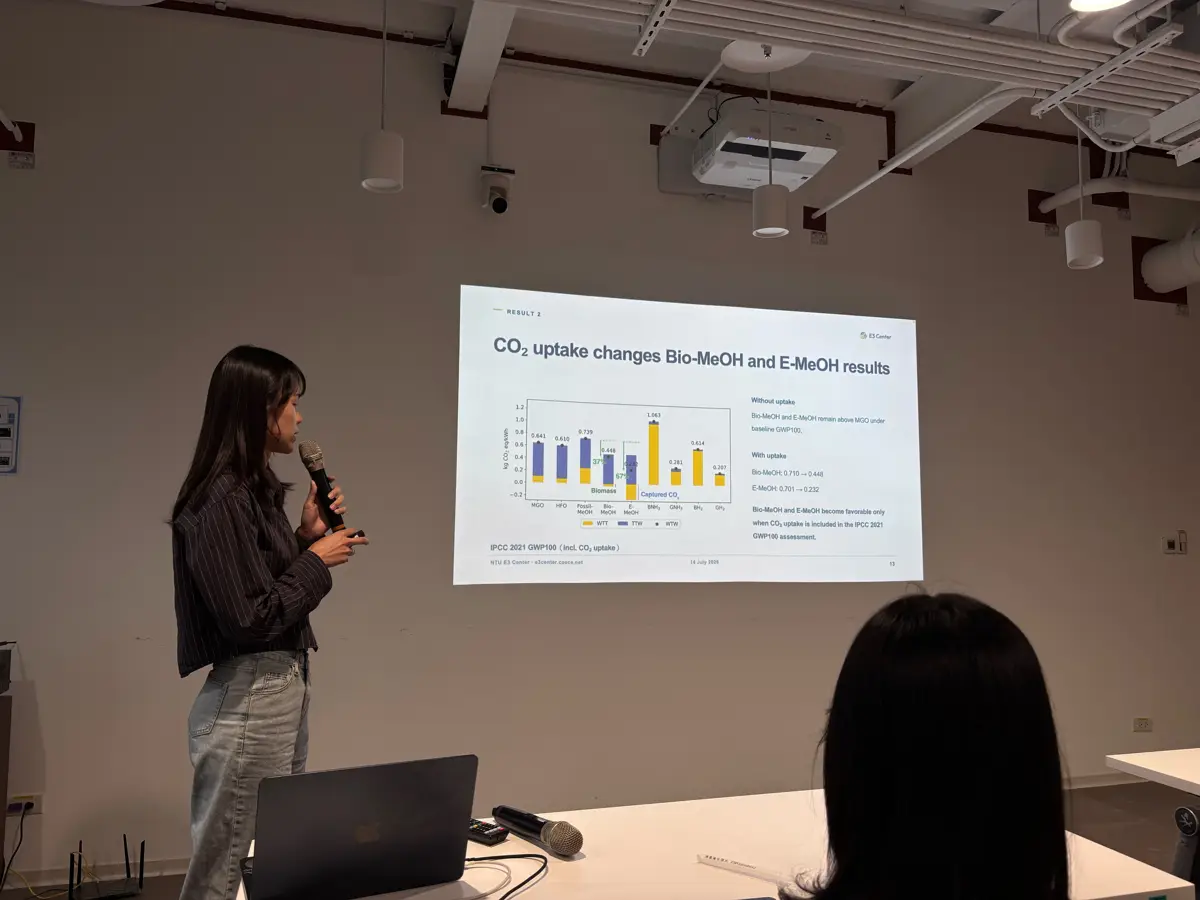
Yu-Ran Keng followed with a well-to-wake life cycle assessment of nine marine fuel pathways under a Taiwan import scenario, and her message was that fuel labels are not enough. The carbon-free carriers do not so much eliminate emissions as move them upstream into production, electricity, and liquefaction — blue ammonia came out the worst of all nine on baseline assumptions — while a lower carbon footprint is no guarantee of lower impact overall, with several of the cleaner routes trading climate gains for acidification and eutrophication.
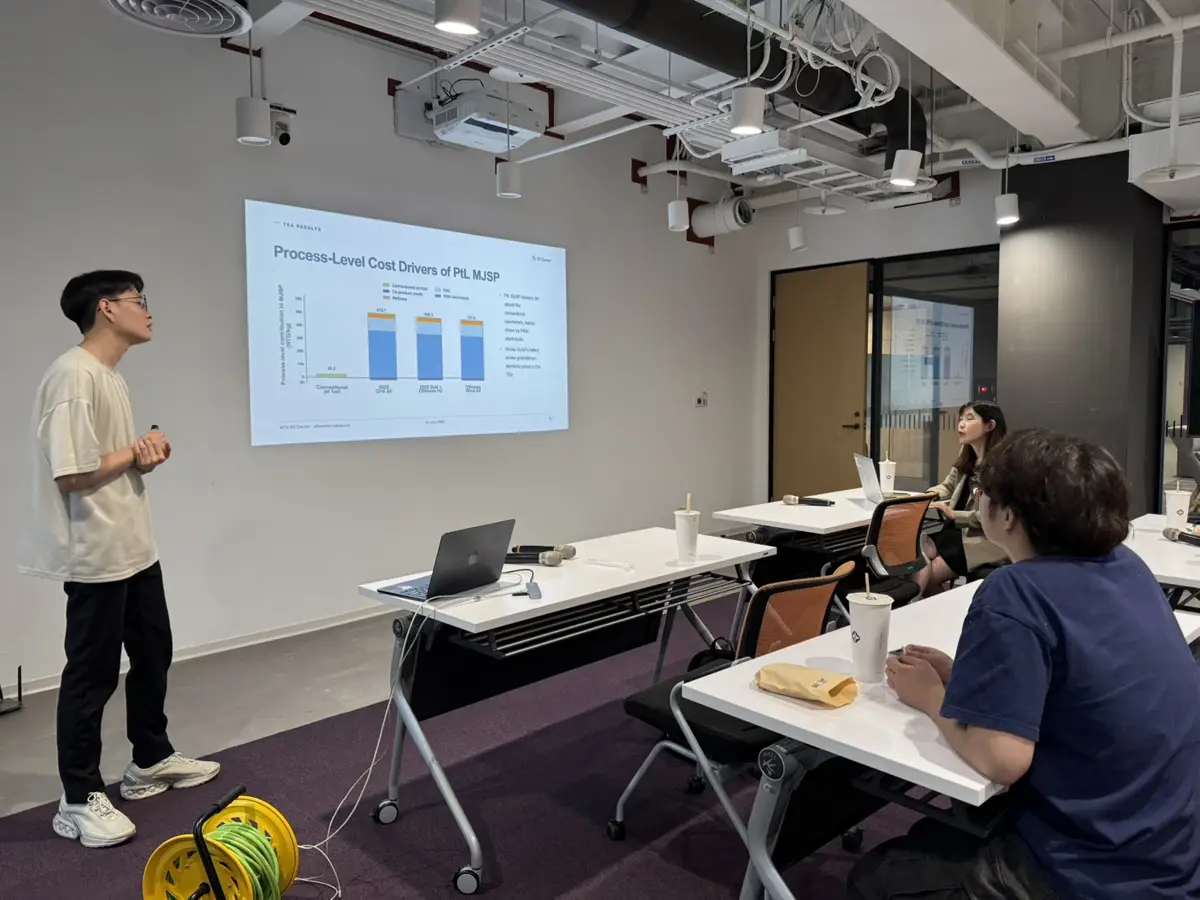
Shao Yang Cheung closed the student session by comparing conventional jet fuel with power-to-liquid (PtL) aviation fuel, and the numbers cut the same way. Made with today's Taiwanese grid, PtL is more than ten times worse for the climate than the fuel it replaces, and only when every stage runs on offshore wind does it cut emissions deeply — even then falling just short of ReFuelEU Aviation's 70% bar. Its minimum jet-fuel selling price, meanwhile, stays far above the conventional benchmark, driven overwhelmingly by PEM electrolysis. Cheap clean electricity, in other words, is the hinge the whole e-fuel case turns on.
Are National Ambitions Keeping Pace?
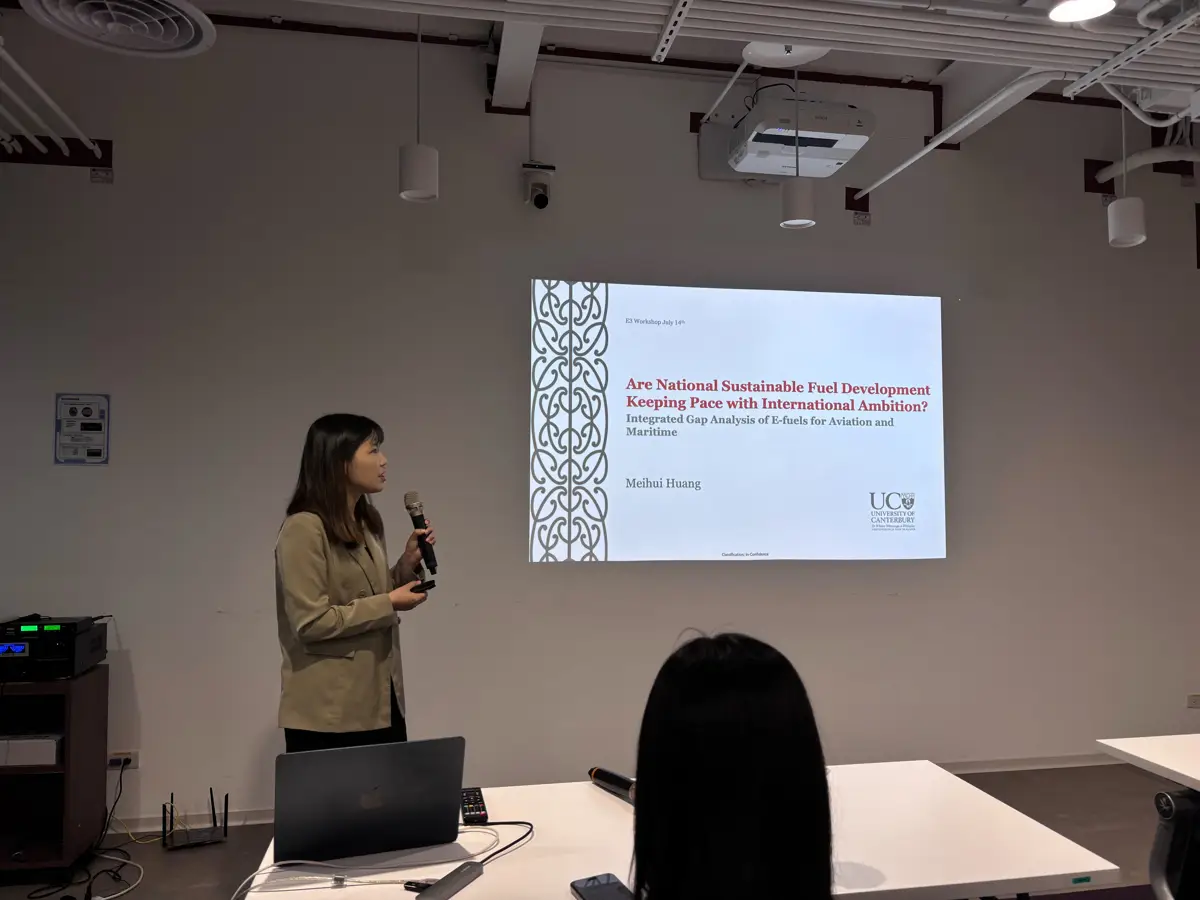
Mei-Hui Huang (Sustainable Energy Research Group, University of Canterbury) rounded out the program by asking whether what countries are actually doing on sustainable fuels matches what they have promised — measured against international and regional targets like ICAO and the IMO, ReFuelEU Aviation and FuelEU Maritime.
Rather than treating policy and fuel supply as two separate stories, her approach draws on the social-ecological systems literature to read them as one system — setting what governments have actually put in place beside what the e-fuel market looks likely to deliver. The broad picture she sketched was clear enough: there is no common playbook. Countries are pursuing markedly different strategies, and aviation and maritime are not moving in step with one another — a gap that has as much to do with institutions and the clarity of the fuel pathway as with the technology itself. That reading opened up the afternoon's liveliest exchange.
Looking Ahead
The seminar ended where the best ones do — in open discussion, with students, faculty, and industry researchers still talking well past the last slide. Our thanks to Dr. Wong and Ms. Huang for travelling to join us, and to MIRDC for co-hosting.
Wind, hydrogen, e-fuels, and the rules that govern them are usually studied in separate silos. Getting them into one room for an afternoon is how we start treating them as the single system they will have to become.